
How Nonprofits Can Optimize Excess Cash in 2026 – A Guide to Nonprofit Cash Management
In 2026, nonprofit organizations continue to face a difficult financial landscape. Charitable giving has become less predictable for many organizations, operating expenses remain elevated, and demand for services continues to grow. Finance leaders are under increasing pressure to increase funding while ensuring their organizations remain financially resilient.
Most nonprofits have focused their efforts on increasing fundraising, controlling expenses, and improving operational efficiency. However, one important opportunity is often overlooked: optimizing how excess cash is managed as part of a broader non-profit financial management strategy.
Whether held for payroll, upcoming grant distributions, capital improvements, or operating reserves, excess cash should do more than simply sit in a low-yield bank account. It should remain secure, readily available, and earn a competitive return while waiting to be used.
A well-designed cash management strategy helps nonprofit organizations protect donor funds, preserve liquidity, and generate additional interest income, all without taking on unnecessary investment risk.
The Financial Reality Facing Nonprofits
Today’s nonprofit finance leaders must balance growing financial challenges with an unwavering commitment to their mission. Rising labor costs, increased insurance premiums, higher technology expenses, and persistent inflation have placed significant pressure on operating budgets. At the same time, many organizations have experienced slower growth in donations while demand for community services continues to increase.
Unlike for-profit organizations, nonprofits cannot simply raise prices or pursue higher-risk investment strategies to offset budget shortfalls. Every financial decision must support long-term sustainability while maintaining the confidence of donors, grant makers, board members, and the communities they serve.
That makes strategic cash management more important than ever.
While optimizing the return on excess cash will not solve every financial challenge, it can create an additional source of revenue that helps offset rising expenses without requiring additional fundraising or reducing programs.
Finding the Right Balance: Safety, Liquidity, and Return
Effective nonprofit cash management is built on three essential priorities:
- Safety. Protecting principal should always come first. Excess cash represents resources that support the organization’s mission and should be held in secure, FDIC-insured deposit solutions whenever possible.
- Liquidity. Cash must remain available when it is needed. Payroll, grant distributions, vendor payments, and unexpected expenses require organizations to maintain easy access to their funds without unnecessary restrictions.
- Competitive Returns. Once safety and liquidity needs are met, organizations should seek opportunities to earn competitive interest on excess operating cash. Even modest improvements in yield can produce meaningful additional revenue over time.
These three priorities work together. The strongest cash management strategies do not force nonprofits to sacrifice liquidity for yield or safety for higher returns. Instead, they balance all three objectives to support both financial stability and organizational growth.
Signs Your Nonprofit Needs Better Cash Management
Many nonprofits unknowingly leave valuable interest income on the table.
It’s common for organizations to maintain substantial balances in operating accounts that were designed for daily transactions rather than long-term cash management. While these accounts provide convenience, they often earn little interest and may leave balances exceeding standard FDIC insurance limits.
As of July 2026, the national average money market deposit rate was approximately 1.40%, although actual institutional rates vary based on account type, balance, financial institution, and market conditions. Many nonprofits may be earning less than they could on excess cash simply because their funds remain in accounts that prioritize convenience over optimizing returns.
As reserves grow or grant funding accumulates between distributions, organizations may find themselves with significant idle cash that could be earning substantially more while maintaining the safety and liquidity required to support their operations.
A periodic review of cash balances often reveals opportunities to improve both earnings and deposit protection. Even a modest increase in the yield earned on excess operating cash can generate meaningful additional income, revenue that can help offset rising operating expenses, support programs, or reduce pressure on fundraising efforts without taking on additional investment risk.
Excess Cash Solutions for Nonprofits
Every nonprofit has different operating needs, but several best practices can help organizations make better use of excess cash.
Segment Cash by Purpose
Not every dollar needs the same level of accessibility.
Daily operating funds should remain readily available for routine expenses, while reserves designated for future projects or anticipated expenditures may be appropriate for cash management solutions designed to generate higher returns without sacrificing security.
Separating cash according to expected use allows organizations to align liquidity with actual operational needs.
Protect Large Deposits
Organizations that maintain balances above standard FDIC insurance limits should evaluate whether their deposits are adequately protected.
One option is to open accounts at multiple financial institutions and distribute deposits so that balances remain within applicable FDIC insurance limits at each bank. While this approach can provide additional protection, it may also require managing multiple banking relationships, online portals, statements, cash transfers, and account balances.
For nonprofits, that administrative burden can be particularly significant. Many organizations operate with lean finance teams and may not have the same treasury resources or dedicated staff as larger businesses. Manually monitoring balances and moving funds among multiple banks can take valuable time away from other financial and operational priorities.
Another option is to work with a cash management firm that can help streamline the process by providing access to a network of participating banks. Rather than requiring nonprofit to establish and manage numerous individual banking relationships on its own, a cash management solution can help distribute deposits across multiple institutions, providing access to expanded FDIC insurance coverage while simplifying administration.
This approach can help nonprofits protect larger cash balances while maintaining liquidity, earning competitive returns, and reducing the day-to-day burden on internal staff.
Regardless of the approach, the goal is the same: protecting donor funds while ensuring excess cash remains secure, accessible, and working efficiently for the organization.
Review Cash Regularly
Cash needs change throughout the year.
Seasonal fundraising cycles, grant awards, capital campaigns, and major projects all affect available cash balances. Reviewing cash positions regularly helps finance teams identify excess funds that may be earning below-market returns and adjust strategies as organizational needs evolve.
Align with Investment Policies
A nonprofit’s cash management approach should support its board-approved investment or treasury policy.
Regular reviews ensure cash management decisions remain consistent with the organization’s objectives, liquidity requirements, and fiduciary responsibilities.
Small Improvements Can Create Meaningful Impact
In today’s economic environment, every additional dollar matters.
While a quarter of a percentage point may not seem significant, even small improvements in yield can generate meaningful additional revenue over time. For example, a nonprofit with $1 million in excess operating cash could earn approximately $2,500 more per year with just a 0.25% increase in its interest rate. For organizations with larger cash balances, the impact grows even more:
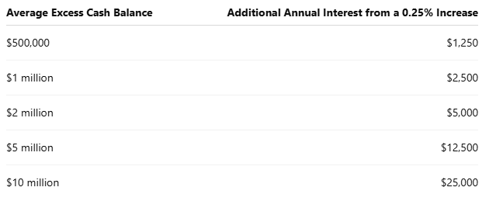
Those additional earnings can help offset rising operating expenses, support new programs, purchase equipment, fund scholarships, or reduce pressure on fundraising efforts—all without increasing investment risk or compromising liquidity.
For nonprofits, optimizing excess cash isn’t about chasing the highest return. It’s about making every dollar entrusted to the organization work harder in support of its mission while maintaining the safety and accessibility those funds require.
Questions Every Nonprofit Finance Leader Should Ask
As organizations evaluate their financial strategy for 2026, finance leaders should consider the following questions:
- Are our deposits fully protected?
- Are we earning a competitive return on excess cash? Do we know the rate we are currently earning?
- How much idle cash do we maintain throughout the year?
- Are our liquidity needs aligned with how our cash is invested or deposited?
- When was our cash management strategy last reviewed?
- Does our current approach reflect our fiduciary responsibility to protect donor funds while maximizing available resources?
Honest answers to these questions can reveal opportunities to improve financial performance without changing the organization’s mission or increasing investment risk.
Looking Ahead
Nonprofit organizations exist to serve their communities—not to speculate in financial markets. Yet responsible stewardship requires more than simply keeping cash safe. It also means ensuring every available dollar contributes as much as possible to advancing the mission.
As nonprofits continue to navigate tighter budgets and growing demands in 2026, optimizing excess cash has become an increasingly important component of sound financial management.
By protecting principal, preserving liquidity, and earning competitive returns through secure cash management solutions, nonprofit organizations can strengthen their financial resilience, safeguard donor trust, and dedicate more resources to the programs and people who depend on them.
In an environment where every dollar counts, effective cash management isn’t just good treasury practice, it’s an extension of responsible stewardship and a meaningful way to maximize the impact of every donor contribution.
For another great resource, check out our free eBook, 5 Ways to Increase Engagement and Donations to see the top 5 strategies nonprofit executives are using to optimize funds. Download your copy here.
The CFO’s Guide to Choosing the Right Cash Management Partner
Learn how CFOs can choose the right cash management partner to protect deposits, optimize returns, maintain liquidity, and simplify treasury operations.
7 HOA Reserve Fund Basics for 2027: A Cash Management Guide for Mid-Sized Associations
For a homeowner’s association, reserve funds are more than money sitting in a savings account. They are funds set aside for the community’s future –…
LGIPs vs. Cash Management Firms: What Municipal CFOs Should Know
When municipalities have significant cash to manage, Local Government Investment Pools (LGIPs) are often one of the first places finance leaders look. They are designed…
